Why does your Indian sandstone patio need a specialist summer clean?
As the days grow longer and the evenings warmer, outdoor spaces begin to come back to life. Garden parties, relaxed afternoons, and dining all centre around one key feature – your patio. It becomes the backdrop for entertaining, unwinding, and making the most of summer at home.
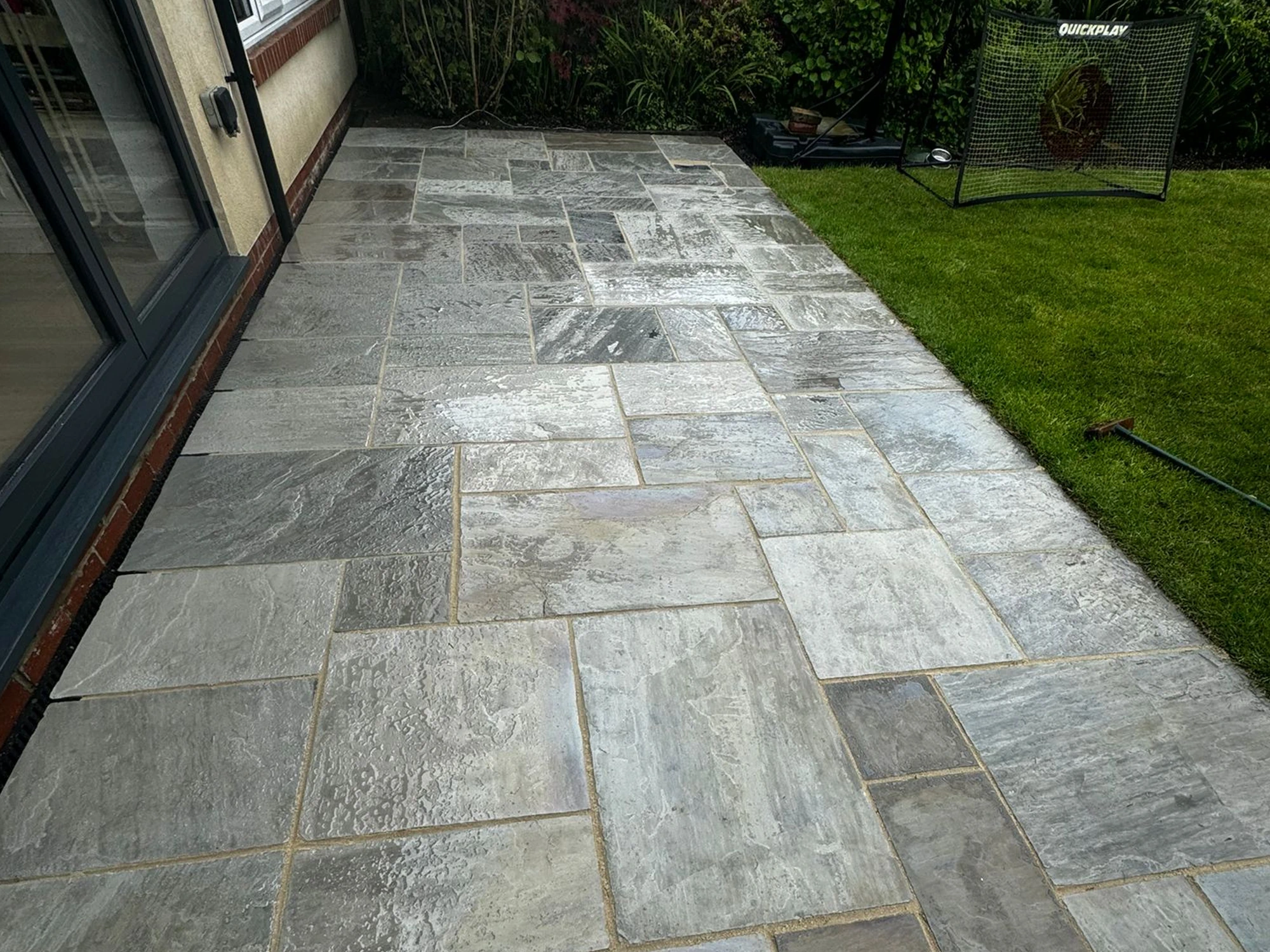
However, if your patio is made from Indian sandstone, you may have noticed that its rich, warm ‘sunset hues’ don’t always stand the test of time. Gradually, the surface can become dulled by dark patches, green growth, and ingrained dirt, leaving it looking tired rather than inviting.
In this blog post, we’ll explore why Indian sandstone behaves differently from other paving materials, why common cleaning methods can cause damage, and how a specialist approach can restore and protect its natural beauty.
Why Indian sandstone is different
Indian sandstone is a popular choice for patios thanks to its natural colour variation and unique character.
No two slabs are exactly the same, which is what gives it that sought-after, high-end appearance. However, beneath that beauty lies a material that behaves very differently from other types of paving.
At its core, Indian sandstone is a natural, porous sedimentary stone. Unlike manufactured slabs or denser materials, it contains tiny pores that readily absorb moisture. This means that whenever it rains – or even in damp conditions – water is drawn into the stone rather than simply sitting on the surface.
This porosity, combined with its naturally riven texture, creates the perfect environment for organic matter to settle and thrive. Over time, patios often begin to show signs of:
- Algae growth forming green surface layers
- Moss build-up in joints and shaded areas
- Lichen and black spot staining that spreads across the stone
One of the key challenges with Indian sandstone is that these issues don’t just sit on the surface. Instead, moisture carries contaminants deeper into the stone, allowing stains to penetrate below the visible layer. This is why simple cleaning methods often fail to fully restore its original appearance.
Seasonal changes only make matters worse. During winter, the stone becomes saturated with moisture, encouraging organic growth to take hold. Then, as temperatures rise, the summer heat effectively locks in that discolouration, leaving patios looking dull and patchy just when you want to enjoy them most.
Another challenge with Indian sandstone is that discolouration is rarely uniform. Areas affected by shade, poor drainage, or overhanging vegetation often hold moisture for longer, creating ideal conditions for algae and black spot to develop more aggressively.
This can leave patios looking patchy, with some slabs darkened while others lose their natural warmth and colour.
As this build-up often happens gradually, many homeowners assume the stone has simply weathered with age. In reality, much of that lost vibrancy is often hidden beneath contamination and can be restored with the right specialist treatment.
Why high-pressure washing can cause damage
When your patio starts to look tired, reaching for a pressure washer can feel like the obvious solution. It’s quick, convenient, and at first glance, highly effective. However, when it comes to Indian sandstone, high-pressure cleaning is one of the most common and costly mistakes homeowners make. Here’s why:
It can strip and erode the surface
Indian sandstone is a relatively soft, porous material, which means it doesn’t respond well to aggressive cleaning. High-pressure washing can wear away the top layer of the stone, stripping out its natural colour variation and leaving it looking faded rather than refreshed.
It damages joints and leaves an uneven finish
The force of the water doesn’t just impact the slabs – it can also loosen or remove the pointing between them. On top of that, inconsistent pressure or technique often results in a patchy, streaked appearance, with some areas over-cleaned while others remain dull.
It makes future problems worse
Perhaps the biggest issue is what happens after the cleaning is done. High pressure can open up the stone’s pores even further, making it more absorbent. In simple terms:
- Moisture soaks in faster
- Dirt and organic growth take hold more easily
So, while the patio may look cleaner in the short term, it often becomes more vulnerable to staining over time. High-pressure washing might seem like a quick win, but it frequently leads to long-term deterioration, turning what should be a simple clean into a much bigger problem down the line.
Other common mistakes when cleaning Indian sandstone
While pressure washing is one of the most common causes of damage, it’s not the only cleaning mistake that can affect Indian sandstone over time. Well-intentioned DIY methods can sometimes do more harm than good, particularly when unsuitable products or techniques are used.
Harsh off-the-shelf chemicals, for example, can lead to uneven discolouration or react poorly with natural stone. Likewise, sealing a patio before it has fully dried can trap moisture beneath the surface, potentially encouraging the very issues you are trying to prevent.
Even small oversights, such as neglecting joints after cleaning or using the wrong treatment for specific staining, can affect both appearance and longevity. A specialist approach helps avoid these problems by treating cleaning, restoration, and protection as part of one considered process.
The benefits of soft washing
Soft washing is the method that delivers results without risking damage. Designed specifically for delicate surfaces, it provides a professional clean that works best with materials like Indian sandstone. Here’s why:
A gentler, more effective clean
Soft washing uses a low-pressure system combined with specialist cleaning solutions. Rather than relying on force, it works by treating the root cause of the problem, breaking down organic growth deep within the stone.
Restores without damaging
As the process is controlled and non-abrasive, it protects the integrity of the stone while still delivering a noticeable transformation. In most cases, this means:
- The natural structure of the sandstone is preserved
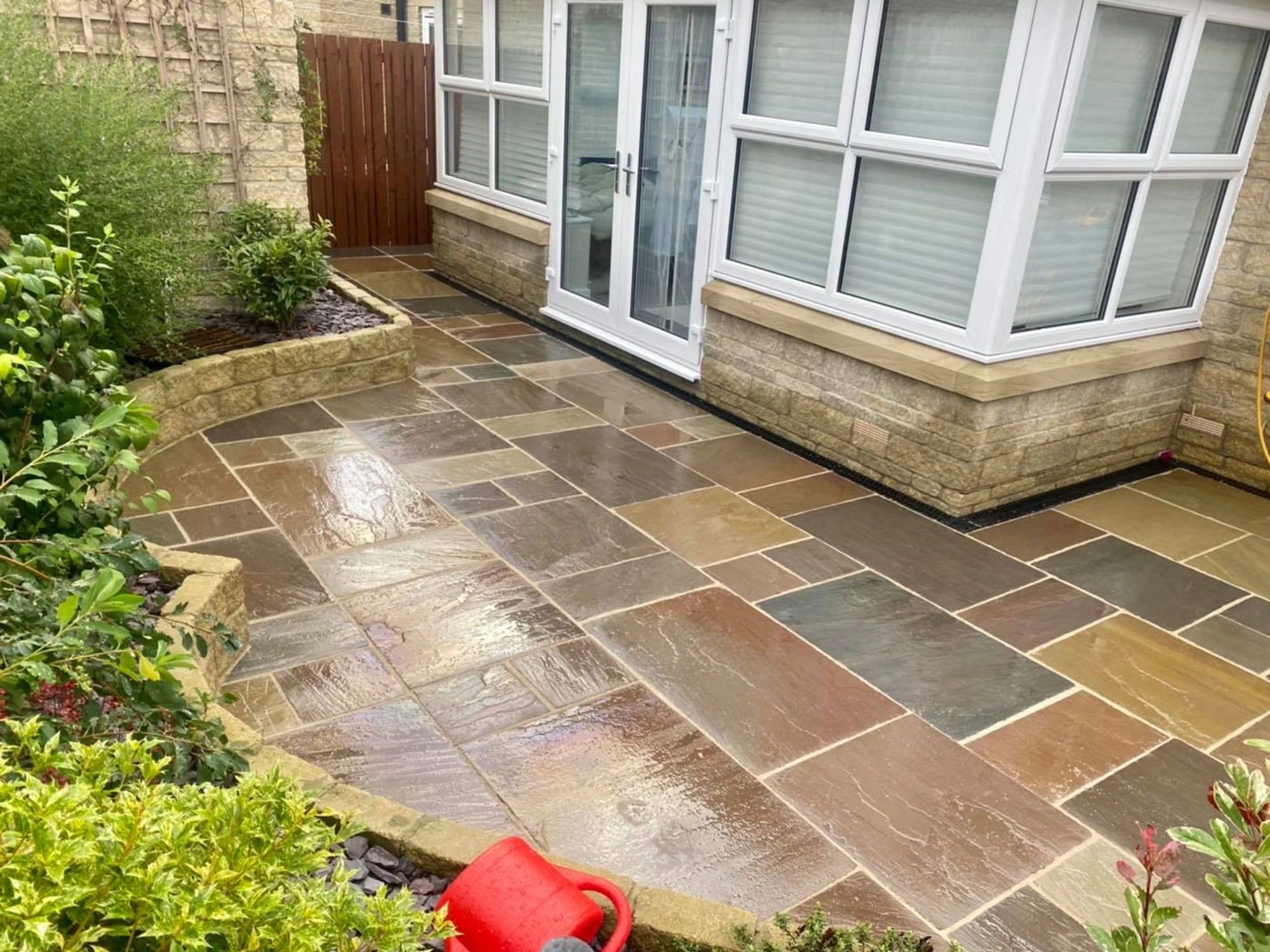
- The original colour variation is restored evenly
- No risk of surface erosion or joint damage
Longer-lasting results
One of the biggest advantages of soft washing is that it doesn’t just clean but helps keep surfaces cleaner for longer. By treating algae, moss, and lichen at the source, it slows regrowth and extends the results well beyond a surface-level wash.
Particularly well suited to materials like Indian sandstone, soft washing provides a finish that looks cleaner, more consistent and more durable over time, all through a method that is gentle, controlled, and built to last.
Sealing your patio for longer-lasting protection
Once your Indian sandstone patio has been properly cleaned and restored, the next step is protecting those results.
This is where patio sealing plays an important role. A professional-grade sealant creates a protective barrier that helps lock in the restored colour while reducing the stone’s ability to absorb water. Rather than allowing dirt and moisture to penetrate the surface, the sealant helps keep contaminants at bay.
In practical terms, this can help:
- Reduce staining and surface soiling
- Slow the return of algae, moss, and lichen
- Make ongoing maintenance easier
Sealing also helps your patio cope better with changing weather conditions. By limiting moisture absorption, the stone is better protected during damp winter months. This is often where staining and discolouration begin before becoming more noticeable in summer.
The result is a patio that is easier to maintain and remains protected against everyday wear. Once your sandstone has been restored to its former glory, sealing helps preserve that finish and protect it from next winter’s grime.
How Paul Dyson can help
When it comes to restoring Indian sandstone, the difference isn’t just in the method – it’s in the experience behind it. A professional approach ensures your patio is treated correctly from the outset, avoiding the risks that can come with guesswork or off-the-shelf solutions.
Using commercial-grade soft washing equipment, we deliver a deep, effective clean while maintaining full control over pressure and application. This allows for a far more precise and consistent result than standard DIY methods.
Every sandstone surface is assessed individually to determine the right approach, including:
- The type and severity of staining
- The condition of the stone
- The most effective treatment for long-term results
This tailored process ensures the clean is not only effective, but safe for the material itself, restoring the natural appearance of the stone without causing damage.
Whether working on domestic patios or larger commercial spaces, the focus remains the same: safe restoration, a consistent finish, and results that go beyond the initial clean. The aim is to leave your patio looking even, refreshed, and true to its original character.
If your Indian sandstone patio is looking tired or discoloured, now is the time to act. Get in touch to arrange an assessment and bring your outdoor space back to life for the summer ahead.
Share this article: